Design Process
Learning Byte Summary ▾
Engineering design is not only about building something at the end. It is also about observing, imagining, testing, revising, and reflecting. This project followed a design process that helped us move from bird observation to bird-inspired prototypes.
Overview of our design process
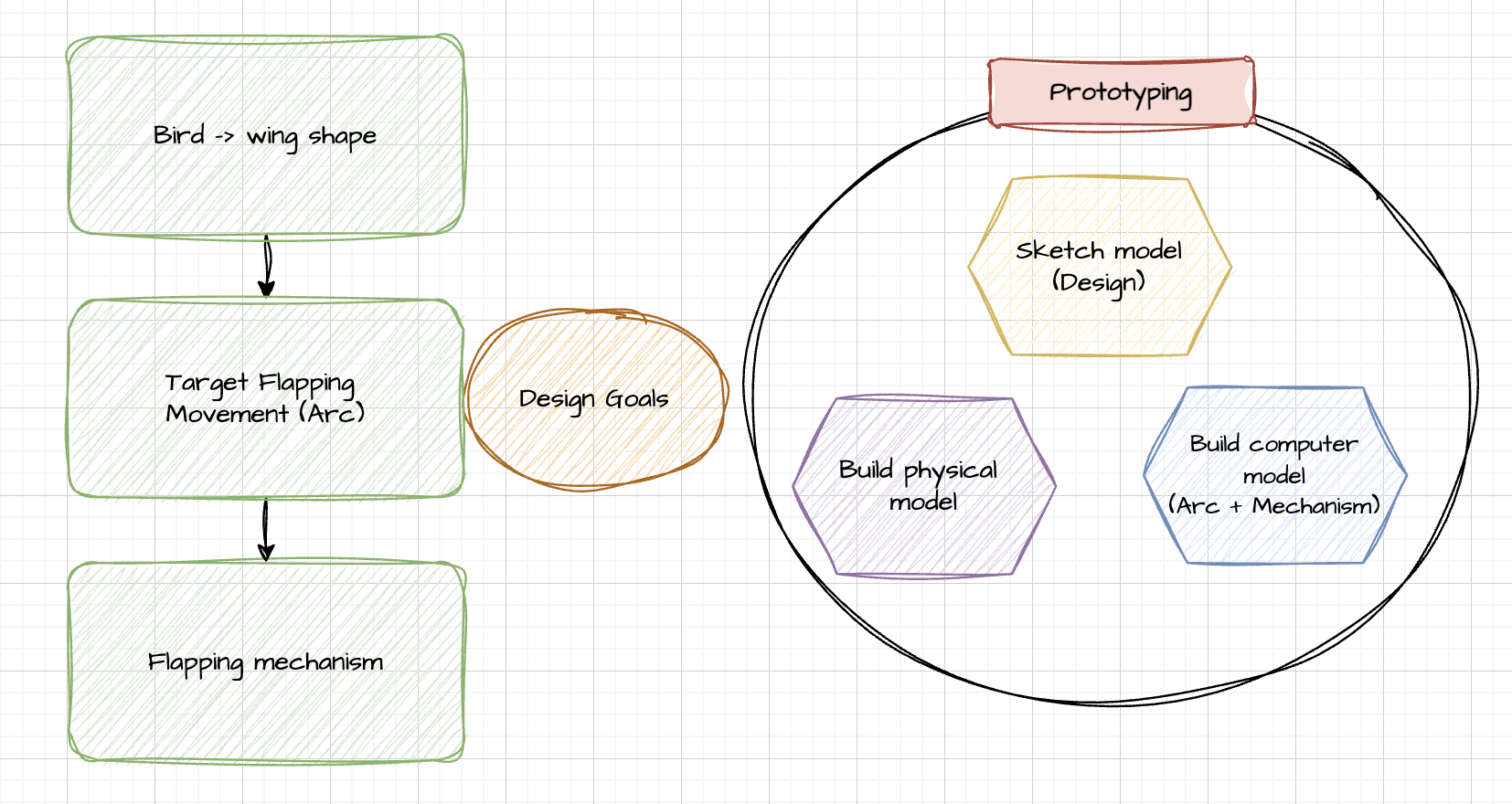
What were the main steps?
1. Observe
We started by looking closely at birds:
- how they flap
- how their wing shape looks
- what kind of wing arc they create
2. Imagine
Next, we thought about what kind of movement we wanted to copy and what kind of bird-inspired robot might capture that motion.
3. Design
We sketched ideas, compared birds, and made decisions about:
- wing shape
- target motion
- linkage form
- prototype structure
4. Build and simulate
We then explored both physical and digital prototypes to see how our ideas behaved when they actually moved.
A key idea: shifting between prototypes
One of the most important ideas in this project is shifting between prototypes. Design does not stay in only one form. We move back and forth between:
- a digital bird, where we can test motion, proportions, and wing arcs
-
a physical bird, where we can feel materials, joints, balance, and real movement
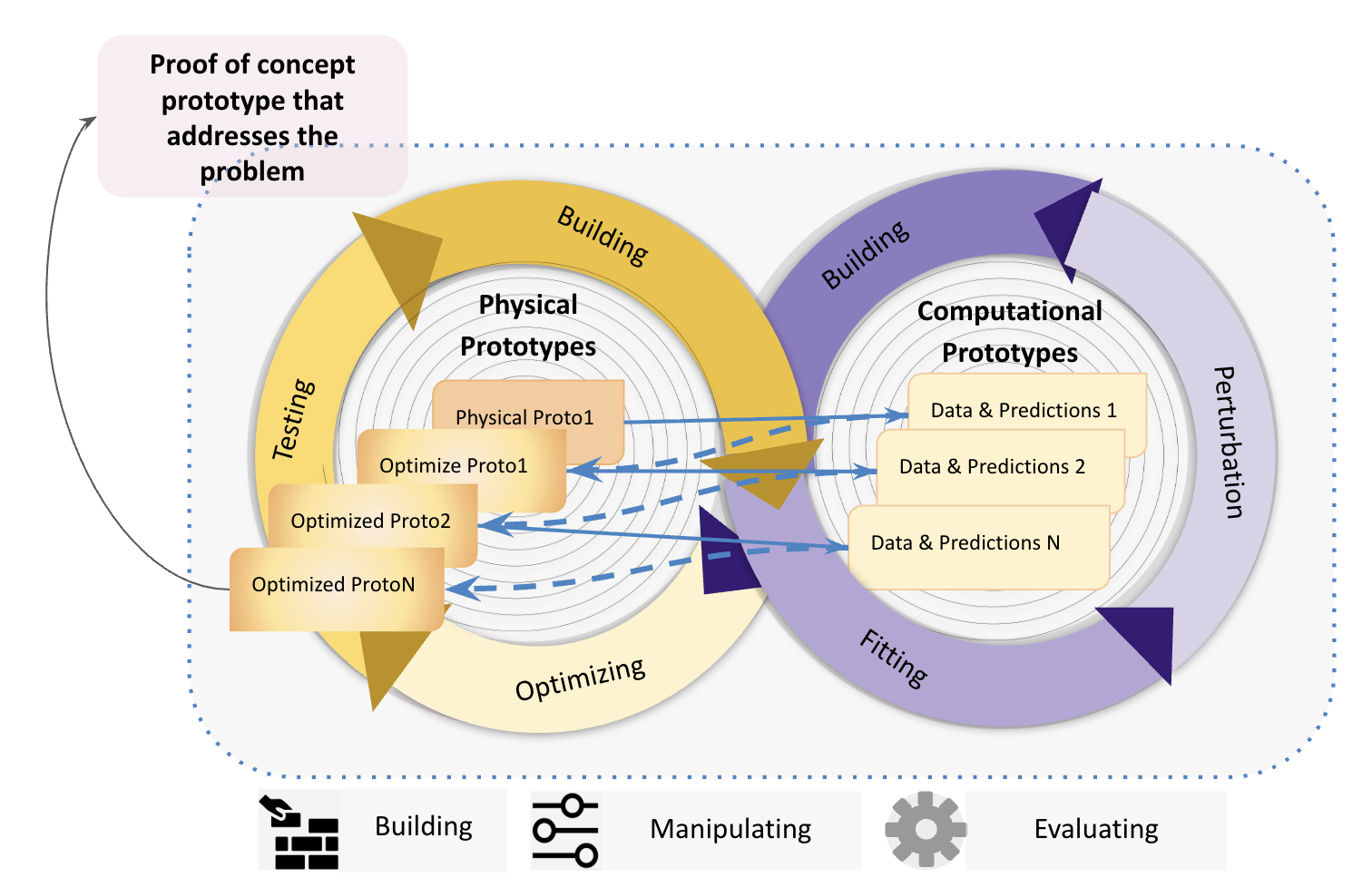 This shifting between prototypes is important because each one teaches us something different.
 - The digital bird helps us test ideas quickly.
- The physical bird helps us notice what is hard to build and what motion feels real.
- Going back and forth helps us revise the design more thoughtfully.
Instead of treating one version as more important than the other, we use both together as part of the design process. The key idea is not just to build a prototype, but to learn by shifting between different prototypes.
Example: a digital model and a physical model
Below are two examples that show how prototype ideas can move across different forms.
Digital prototype
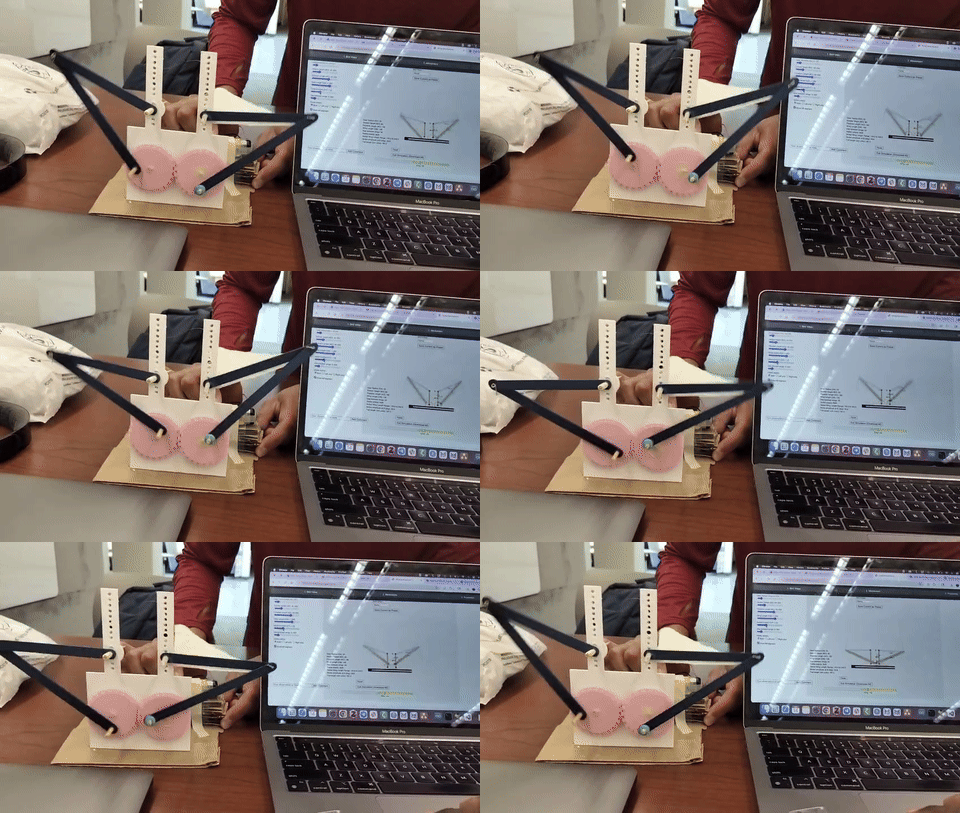 The digital prototype helps us quickly test motion, wing arcs, linkage behavior, and proportions. It is useful for trying ideas before building them physically.
Physical prototype
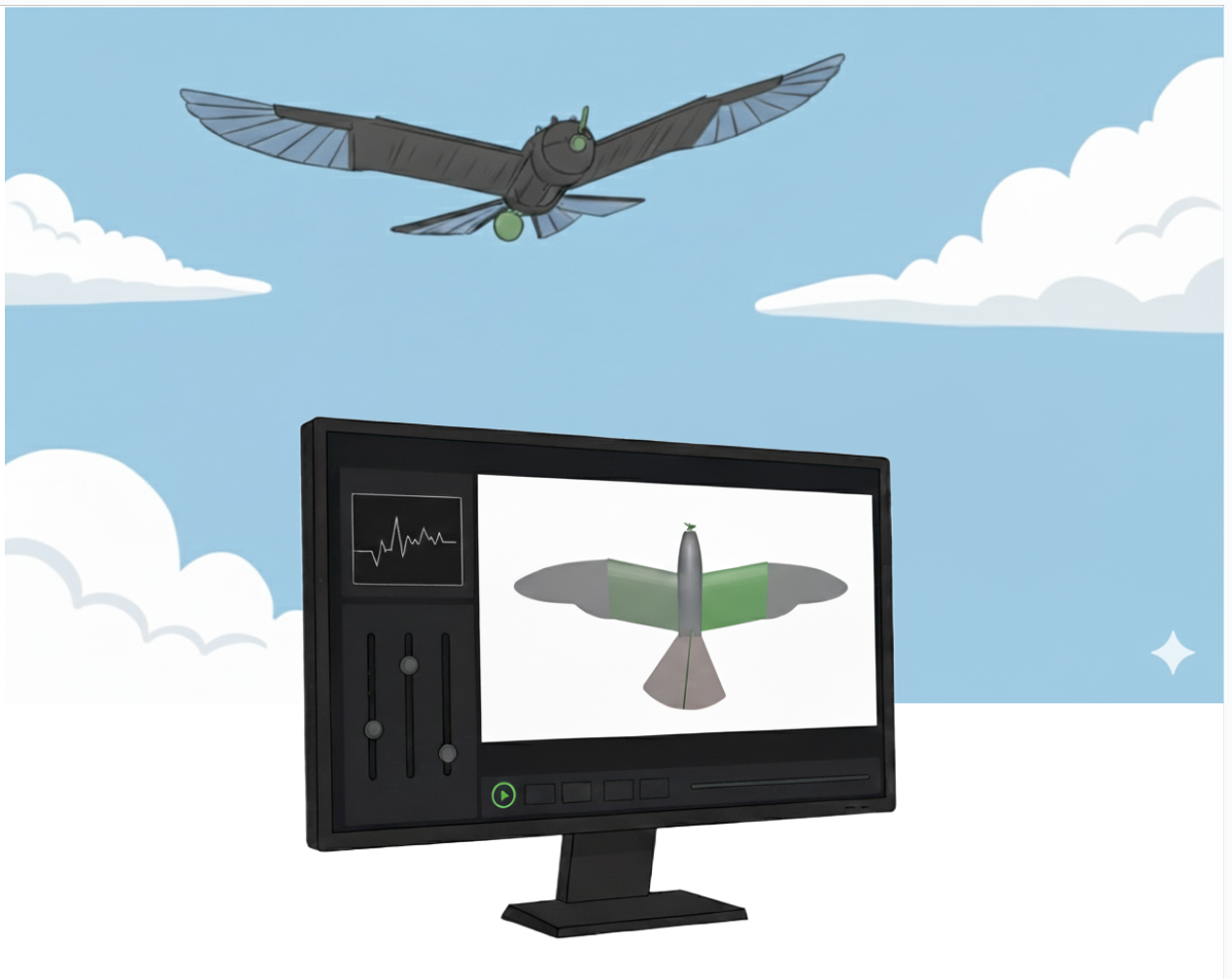 The physical prototype helps us notice how materials, joints, and real movement affect the design. It often reveals constraints that are harder to see in a digital model alone.
Prototype demo
You can also view an example prototype demo here:
5. Reflect
Finally, we looked back at what worked, what was difficult, and what could be improved in the next design cycle.
Why this matters
The design process helps us connect science, engineering, and creativity. Instead of jumping straight to a final answer, we move through a sequence of choices, tests, and revisions.
Engineering Sciences Practices
This project also helps us experience some important engineering sciences practices:
- observing natural systems closely
- asking questions about how movement works
- comparing different kinds of flying systems
- building and testing models
- shifting between physical and digital prototypes
- revising designs based on evidence
- reflecting on what a design helps us understand
These practices matter because engineering science is not only about making something. It is also about using evidence, models, and design choices to understand complex systems and improve ideas over time.
Reflection questions
- Which step of the process helped you the most?
- Where did your design change the most?
- What did bird observation teach you that you would not have learned from building alone?
- If you redesigned your prototype, what would you change first?
Quick recap
- Good engineering design is iterative.
- Observation and reflection are just as important as building.
- Shifting between prototypes is a core design idea.
- Studying birds helps guide better prototype decisions.
- The design process helps turn ideas into tested solutions.
