Wing Beat
Learning Byte Summary ▾
- Explain the difference between wingbeat frequency and wingbeat amplitude
- Describe why scientists measure both flap speed and flap size
- Connect bird wingbeat patterns to energy use during flight
The big idea
When a bird flies, it does not always flap its wings in the same way. Sometimes it needs a small, steady flap. Other times, such as during takeoff or climbing, it needs a much more powerful flap.
Scientists study wingbeats because wing motion gives clues about how much energy a bird is using in flight 1 .
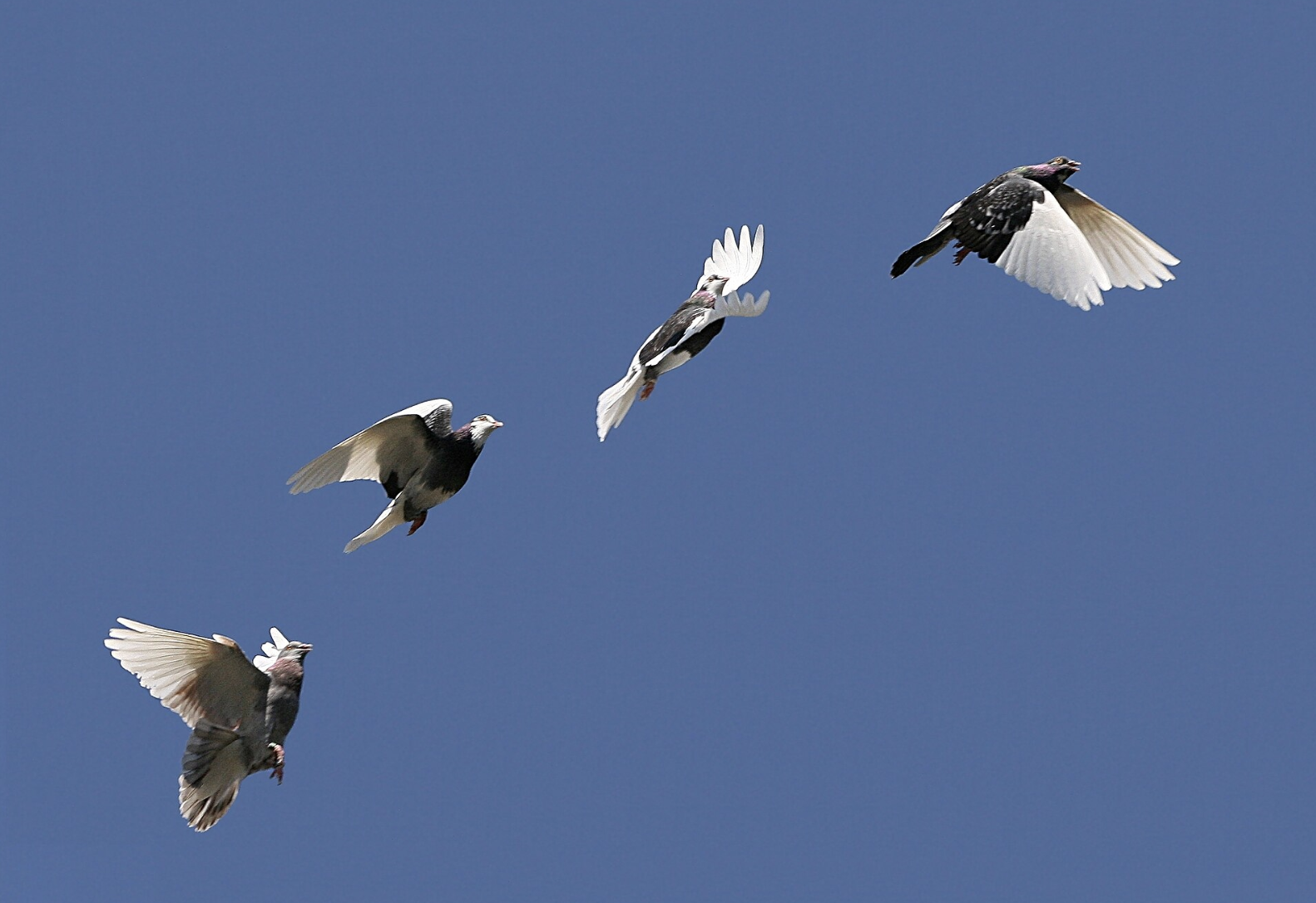
Two parts of a wingbeat
A wingbeat has two important parts:
| Term | Simple meaning | What to imagine |
|---|---|---|
| Wingbeat frequency | How fast the wings flap | Counting how many flaps happen each second |
| Wingbeat amplitude | How big each flap is | Looking at whether the wings move through a small or large stroke |
Frequency is about speed.
Amplitude is about size.
Faster is not always the whole answer
It might seem like a bird can get more flight power by only flapping faster. But the research shows that this is not always enough.
For demanding flight, birds often change the size of the wingbeat too. During actions like takeoff, climbing, hovering, or carrying extra weight, a bird may use a deeper and wider flap. That bigger flap can help produce more force.
How scientists measure wingbeats
Measuring a flying bird in the wild is difficult. Scientists cannot easily use high-speed cameras for every bird in every place.
Instead, researchers can use tiny body-mounted sensors called accelerometers. These sensors are like the motion sensors inside a phone or smartwatch. They measure how the bird’s body moves up and down during each wingbeat.
When a bird makes a bigger wing stroke, its body often moves with a stronger up-and-down signal. Scientists use that body-motion signal as a clue, or proxy, for wingbeat amplitude.
What researchers found
Researchers studied data from 14 bird species flying in the wild, plus pigeons and a dunlin flying in wind tunnels.
They found three important things:
-
Flap speed and flap size are related, but not perfectly. Birds that flap faster often flap bigger too, but the connection is not strong enough to use speed alone.
-
Bigger flaps matter during hard flight. When flight needs more power, birds often increase wingbeat amplitude.
-
Better energy estimates need both measurements. To understand flight effort, scientists should look at both wingbeat frequency and wingbeat amplitude.
Why this matters
Wingbeats help scientists understand how much energy birds spend while migrating, foraging, climbing, or taking off.
This also matters for engineering. If engineers want to design better flapping drones or bird-inspired robots, they need to think about both parts of a flap: how fast the wing moves and how far it moves.
Quick check
If two birds flap at the same speed, could one still be using more flight power than the other? Yes. One bird might be using a larger wingbeat amplitude, which can require more effort and produce more force.
References
-
1.The role of wingbeat frequency and amplitude in flight powerKrishnamoorthy Krishnan and others · Journal of the Royal Society Interface · 2022 · Vol. 19(193), p. 20220168 · CC BY 4.0
Media Credits
-
M1Domestic pigeon flightDerivative work Tony Wills, rearragned by Toby Hudson · Wikimedia Commons · 2009 · CC BY-SA 3.0
