Lift force
Learning Byte Summary ▾
- describe how planes fly
- explain the four forces: lift, weight (gravity), drag, and thrust
Lift force
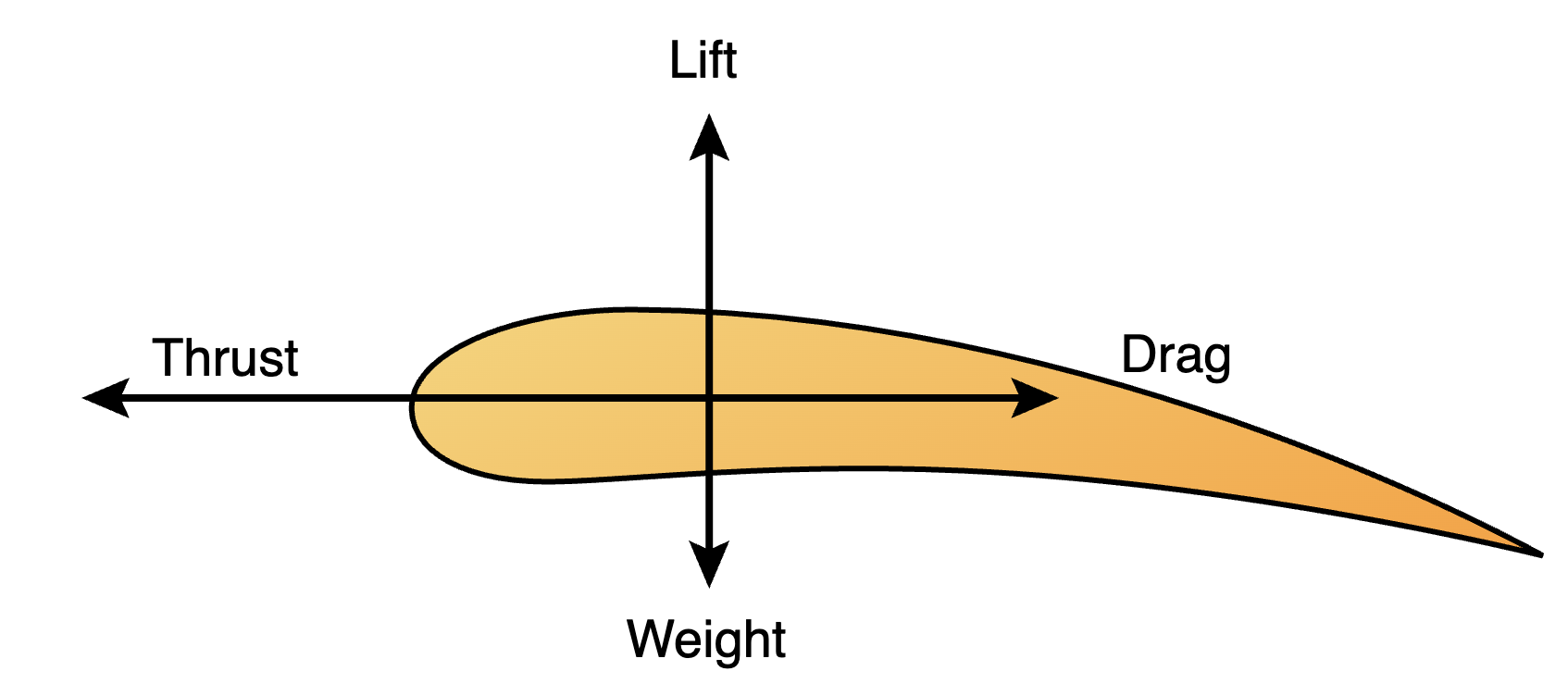
So, we know that lift: the upward force from air that helps an object rise. Planes fly because they generate an upward force called lift.
Explanation 1: How planes generating lift?
Air is a fluid like water, just less dense. For planes, the lift force is mostly generated by the wings. As the plane moves forward, the air passes over the top and bottom surfaces of the wings. Due to the wing’s curve, the air going over the upper surface experiences centripetal acceleration, like the feeling of being pushed outward in a car taking a sharp turn. This causes the air above the wing to gain more speed than the air traveling below. This increased speed leads to a decrease in pressure above the wing. The air flowing across the lower surface, meanwhile, experiences less of a change in direction and speed. So while the faster air above the wing experiences a decrease in pressure, the pressure across the wing’s lower surface remains higher than that above the upper surface. This pressure difference, higher below and lower above, results in the upward force of lift. The faster the plane travels, the greater the pressure difference, and the greater that force. Once it overcomes the downward force of gravity, the plane takes off. 1 .
Explanation 2: How planes generating lift?
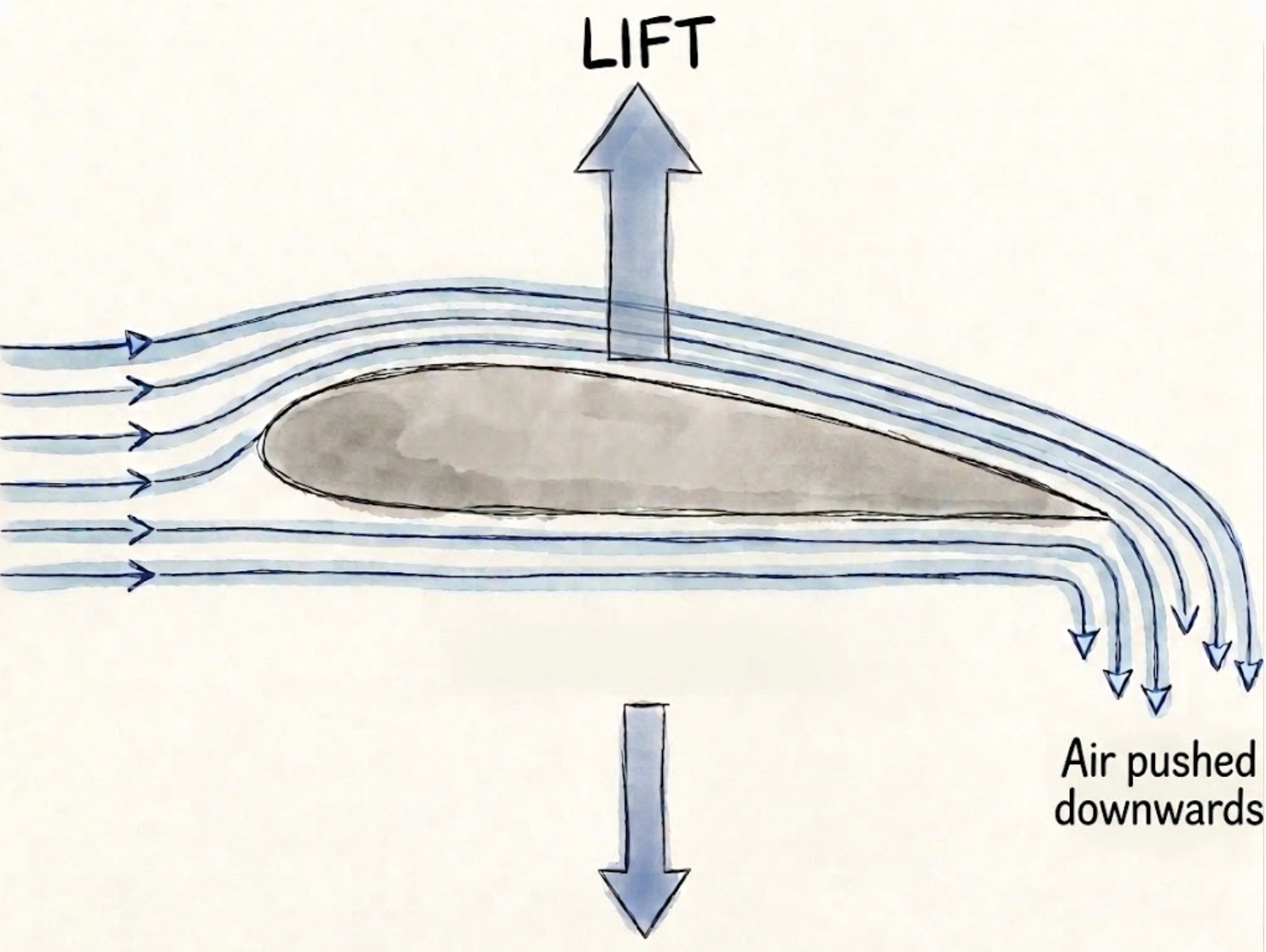
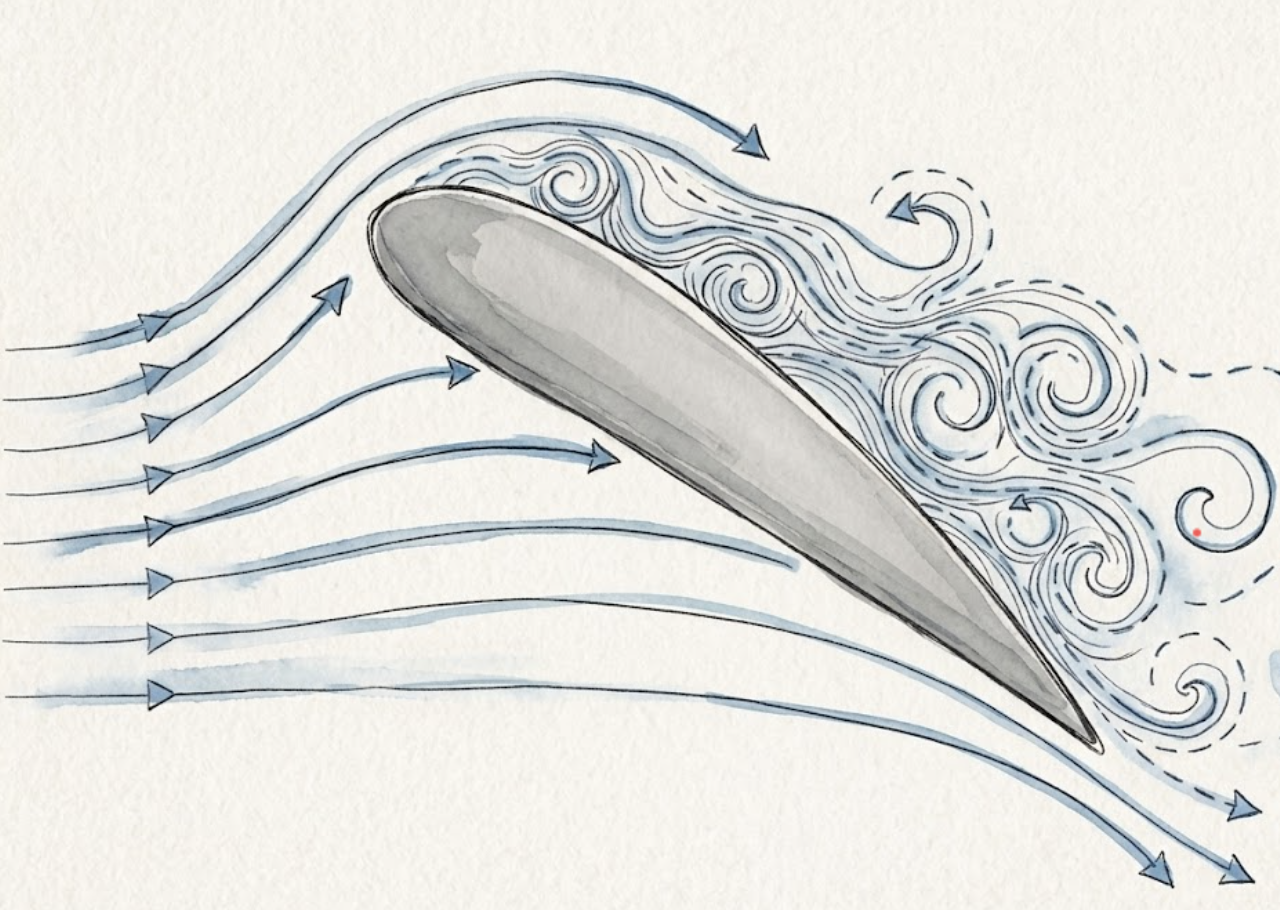
Another way to think about lift starts with the Coanda effect, which says that air will follow the shape of whatever object it encounters. As a wing moves forward, the air sticks to the wing’s curved surface and follows its curve. The airflow over the wing gets pushed downward at the back of the wing. By Newton’s Third Law, that downward push of the air pushes the wing upward. This upward force is called lift. So, does that mean the more the curve, the more the lift? Not really — if the wing’s angle is too steep, the air can no longer stick to the surface of the wing and lift is lost. This is called a stall, caused either by too slow an airspeed or too high an angle of incidence. 2
Feedback
References
-
1.How Do Airplanes Actually Fly?Raymond Adkins · TED-Ed · 2023
-
2.Aerodynamics Explained by a World Record Paper Airplane DesignerJohn Collins · YouTube · 2020
Media Credits
-
M1Lift generationRavi Sinha (AI-generated) · Amazing Birds · 2026 · CC BY-NC-SA 4.0
-
M2StallRavi Sinha (AI-generated) · Amazing Birds · 2026 · CC BY-NC-SA 4.0
-
M3Radio-controlled (RC) planeFred Hsu · Wikimedia Commons · 2017 · CC BY-SA 3.0
-
M4The four forces on an aircraftAmada44 · Wikimedia Commons · 2007 · Public Domain
-
M5Domestic pigeon flightDerivative work Tony Wills, rearragned by Toby Hudson · Wikimedia Commons · 2009 · CC BY-SA 3.0
-
M6Plane control surfacesRavi Sinha · Amazing Birds · 2026 · CC BY-NC-SA 4.0
